
Field notes
Freshly Folded: 1.52k Google Search clicks in 28 days
What the search evidence shows, how the booking site is structured, and why crawl monitoring matters.

Freshly Folded's Google Search Console screenshot, supplied on September 18, 2026, shows 1.52k clicks from Google Web Search over the selected last 28 days. The same report shows 181k impressions, a 0.8% average click-through rate and an average position of 10.4.
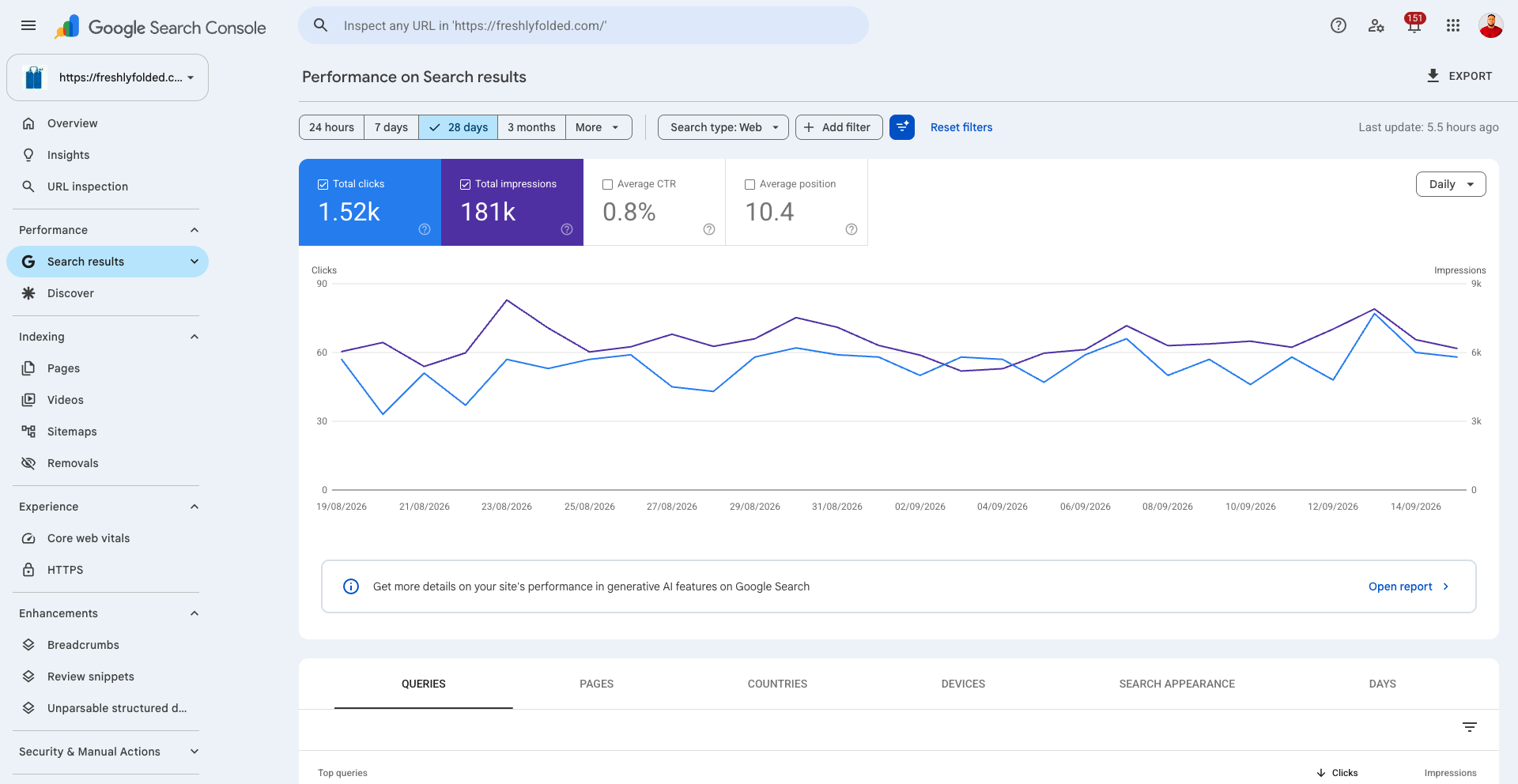
Source: Freshly Folded's Search Console screenshot supplied September 18, 2026. Values are rounded as displayed; search type is Web.
That is a search-click total for a rolling period. It is not a count of unique people, all-channel visits or completed orders. It is also not a completed September calendar-month result. Keeping those distinctions visible makes the case useful to another business owner deciding what to measure.
Freshly Folded is a family-owned laundry pickup and delivery business based in La Mesa, serving customers in San Diego County. Our work includes its booking experience, search, advertising and ongoing site changes. The screenshot is evidence of search activity during the selected period; it does not isolate the effect of each part of that work.
Start with the questions before a booking
A first-time customer needs to establish whether the business serves their address, when the laundry will come back, what the order will cost and how collection works. Those questions belong near the booking path, where the customer is deciding whether to continue.
The original project brief described an unfamiliar task: arranging laundry collection online. The site needed to take someone from an explanation of the service to a confirmed booking. That meant deciding what to show at each step, rather than relying on a large amount of general information to do the work.
For another delivery operator, a useful review begins on a phone. Start at the page a new customer would find, check the service area, choose a service and follow the booking steps. Record each point where the customer needs information that the page has not supplied. That list is a more practical redesign brief than asking for a fresher homepage.
Give each page a clear job
The search work covers service information, service-area pages and page-level SEO. A service page explains the offer. A service-area page helps customers check coverage. A guide answers a narrower question and leads readers back to the relevant service.
Coverage pages should reflect where the business actually collects and delivers. A city name alone does not make a useful page. Customers need the local details that affect their order, such as availability, collection arrangements and any service limits. Those details also need to stay consistent with the booking system.
This is especially important for a delivery business because the website makes a promise that an operating team must fulfil. An inquiry from outside the service area is not equivalent to a bookable customer, even if both appear in the same website traffic report.
Keep the booking decisions connected
The original booking project used separate steps for pickup, delivery, turnaround and service selection. Each decision changes what the customer needs to see next.
Household orders and commercial laundry inquiries can need different paths. Someone arranging a regular business account may need to discuss quantities and collection arrangements before there is an order to place. Someone booking a household pickup needs clear prices, minimums and fees before submitting the order.
The point is to make the next action fit the service. A booking button is useful when the customer has enough information to book. A short inquiry route is useful when the business needs to resolve a question first. Both paths should make clear what happens after submission and who will respond.
Search visibility also depends on access
The earlier Bluehost incident is part of this site's history. Googlebot received a 403 response while ordinary visitors could still open the website. Bluehost identified and excluded the firewall rule involved, and Search Console showed clicks returning afterward.
The documented Googlebot investigation includes the diagnostic screenshots. It is a separate incident report, not proof that the later 28-day total came from the firewall correction alone.
The practical lesson is that a browser check and a crawler check answer different questions. If search traffic changes sharply, inspect crawl access and indexing alongside the page content. A site can look normal to its owner while a search crawler is receiving an error.
Read the report before claiming an outcome
The September screenshot supports a limited, useful statement: Google Web Search generated 1.52k clicks in the selected 28-day period. The 181k impressions describe appearances in search results. Average position is an aggregate across the report, not a promise that every service query ranks in the same place.
To measure bookings, use the booking records. To compare channels, use a consistent analytics setup and reporting period. To make a growth claim, keep the metric, filters and length of the comparison periods consistent. The screenshot alone cannot establish a January-to-September increase or attribute orders to organic search.
We are not publishing an order count or a revenue claim from this report. Search activity and commercial performance are related questions that need separate evidence.
What another operator can use
The useful sequence is straightforward: make coverage clear, explain the offer, remove uncertainty from booking and keep checking whether customers and crawlers can reach the right pages. Then measure search clicks and completed orders with their respective sources.
The Freshly Folded case study documents the booking project. Our laundry pickup and delivery work covers service areas, booking and customer follow-up for other operators.
To review your own booking path, book a call and bring the pages customers use and a report with its metric and date range visible.
Sources
- Freshly Folded, supplied Google Search Console screenshot, September 18, 2026, reproduced above.
- Google Search Central, Using Search Console and Google Analytics together, for the distinction between search clicks and site analytics.